Materials & Tools
Recommended materials and tools for wire crochet practice.
1. Core Learning Objectives
This lesson focuses on one of the most fundamental stitches in wire crochet—the chain stitch.
For beginners, the chain stitch is one of the best techniques for starting your practice. Through this lesson, you will mainly learn two things:
- The correct way to hold the wire and create the starting stitch
- The basic technique for making a chain stitch
2. Course Preparation
Materials
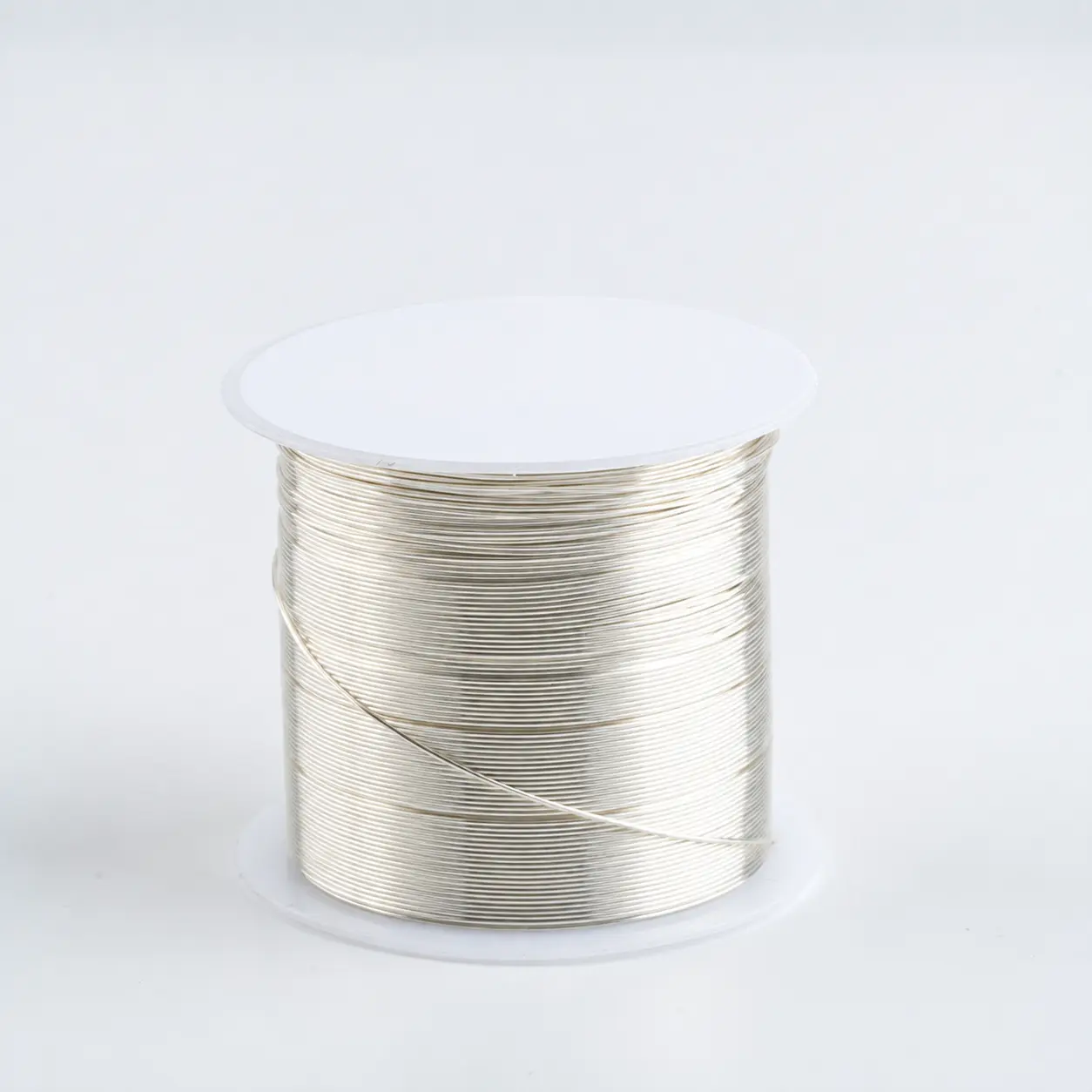
- 0.2 mm Copper Wire
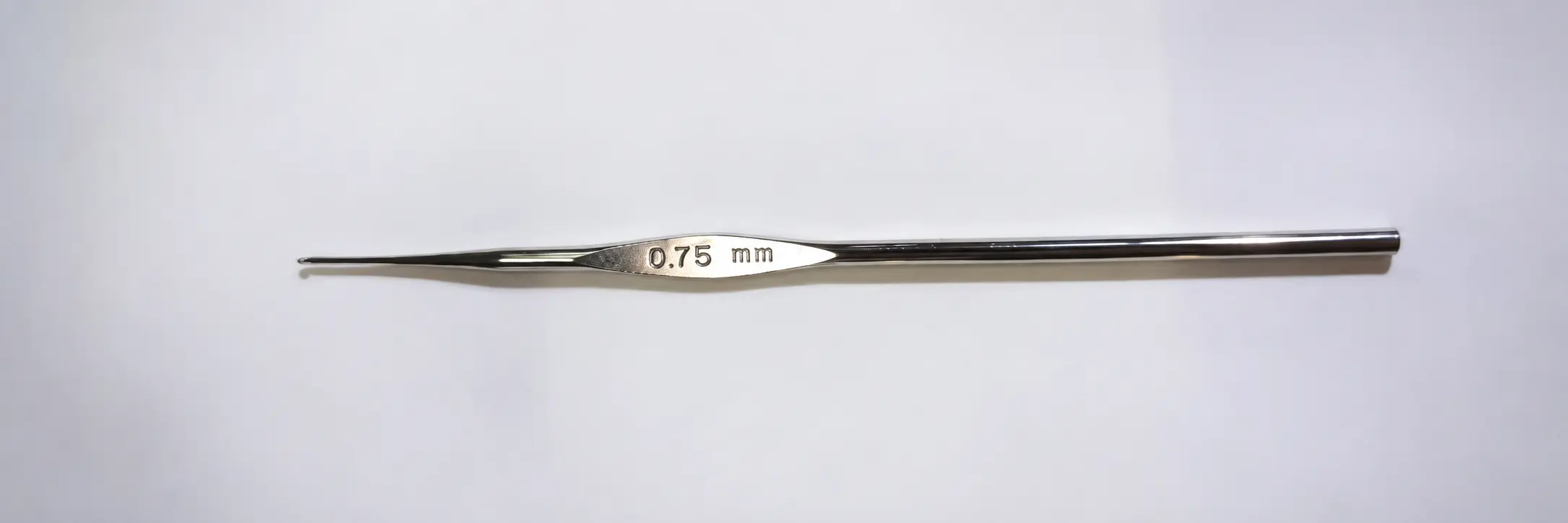
- 0.75 mm crochet hook
The 0.2 mm wire is relatively fine, so it produces a more delicate and refined result.
Later, you can also try using 0.3 mm wire.
3. Key Point One: Holding the Wire Correctly
This is one of the most important things for beginners to pay attention to.
Correct Wire-Holding Position
Pass the wire between your little finger and ring finger, then bring it over your index finger. Use your thumb and middle finger to gently hold the wire.
The key point: the wire should simply pass between your fingers. You do not need to wrap it around your fingers as you would with yarn.
What Not to Do
Do not wrap the wire tightly around your fingers.
In yarn crochet, the yarn is sometimes wrapped around the fingers to control tension. Metal wire, however, has much more friction. If it is wrapped too tightly:
- The wire becomes difficult to pull through your hand
- The tension becomes too strong
- The wire is more likely to develop metal fatigue
- The wire may eventually break
The principle is simple: guide the wire gently rather than locking it tightly in place.
4. Key Point Two: The Basic Chain Stitch Movement
This is the core technical movement of the entire lesson.
Step 1: Position the Crochet Hook Above the Wire
Place the crochet hook above the wire.
Step 2: Wrap the Wire Twice
Wrap the wire around the crochet hook twice to form the initial starting structure.
Step 3: Adjust the Direction of the Hook Groove
This is very important: the groove/opening of the crochet hook should face toward you. This makes it easier to catch the wire smoothly.
Step 4: Catch the Wire
Use the crochet hook to catch the wire behind the loop.
Step 5: Pull the Loop Through
Pull the caught wire through the original loop.
After completing this movement once, you have made one chain stitch.
Then continue repeating:
Catch the wire → Pull through → Catch the wire → Pull through
By repeating this movement, you will create a continuous chain.
5. Three Essential Tips for Beginners
This section contains some of the most valuable points from the original video and is especially useful as a set of beginner tips.
1. Do Not Pull the Wire Too Tight
If the wire remains under too much tension, it can cause several problems:
- It becomes harder to catch the wire
- It becomes harder to pull the loop through
- The stitch openings become smaller and smaller
- Your hands become tired more easily
- The wire is more likely to weaken or break
The correct state: there should be some tension, but the wire should still move smoothly.
2. Do Not Keep Holding the Same Position
This is one of the major differences between wire crochet and traditional yarn crochet.
While crocheting, avoid repeatedly bending the same section of wire for too long.
For example, after crocheting a short section, move the point where your fingers are holding the wire slightly forward before continuing.
Crochet a section → Move your hand forward → Crochet another section
This reduces repeated bending at the same point. Otherwise, the wire may eventually break.
3. Pay Attention to Whether the Stitch Openings Are Even
When beginners first start practicing, there is no need to focus on speed.
What you really need to observe is whether each chain stitch is approximately the same size.
With enough practice, the chain should gradually become:
- Consistent in size
- Even in stitch openings
- Stable in tension
- Smooth in line and overall appearance
Once you can achieve this consistently, it means you have developed a solid basic command of the chain stitch.
6. How Much Should You Practice the Chain Stitch?
A very important standard to keep in mind:
Simply being able to make a chain stitch does not mean you have fully mastered it.
You should continue practicing until your movements become:
Natural
Continuous
Stable
Eventually, you should be able to crochet smoothly without having to watch the hook constantly.
7.Practice Goal for This Lesson
Try to complete one continuous chain and aim for:
Even stitch size
Consistent spacing
Stable tension
Smooth movements
You do not need to aim for perfection.First, focus on control.
A beautiful finished piece often begins with a well-practiced basic stitch.
Continue Learning
Review the essential materials for wire crochet, or continue to the next lesson and apply the chain stitch to a three-dimensional project.


